

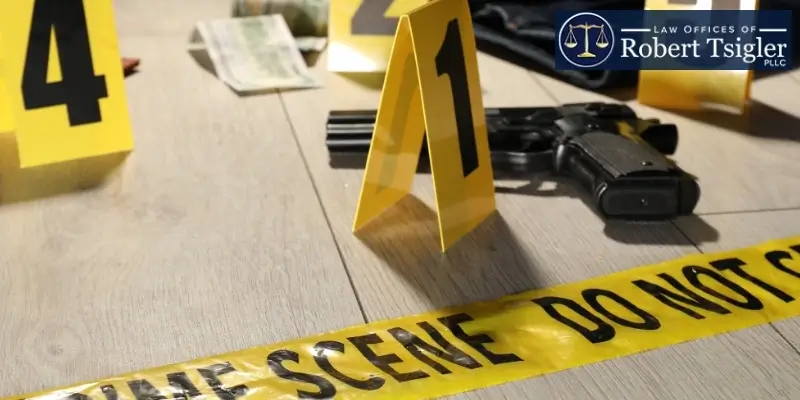
A groundbreaking forensic technique developed by researchers at Maynooth University in Ireland could soon change how prosecutors approach firearms cases. According to recent reporting, scientists have developed an electrochemical method that can reveal fingerprints on fired bullet casings – something that was previously considered impossible due to the extreme heat and pressure that destroy traditional fingerprint residues.
While this scientific advancement has captured headlines, it raises critical questions for anyone facing criminal charges involving firearms: How reliable is this new technology? What standards must prosecutors meet before this evidence can be used against you in court? And most importantly, how can defense attorneys effectively challenge novel forensic methods?
At the Law Offices of Robert Tsigler, PLLC, named one of the 10 Best Immigration Law Firms by the American Institute of Legal Counsel, we closely monitor developments in forensic science and how they impact our clients facing criminal charges in New York.
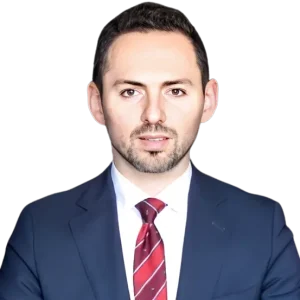
As Attorney Robert Tsigler explained when asked about this new fingerprint technology: “Any new technology in the field of forensics is right on my radar. My experience is that prosecutors too often bring novel ways of doing science to a jury and portray them as the truth. This new electrochemical technique to make fingerprints reveal themselves on spent bullet casings is an interesting development. However, its true test is not in the laboratory, but in a courtroom, where the liberty of a person is at stake.”
Understanding how forensic evidence works – and more importantly, how it can be challenged – is essential for anyone facing serious gun crime charges.
How the New Fingerprint Technology Works
For decades, forensic scientists have considered fingerprints on fired bullet casings to be unrecoverable. The extreme conditions inside a gun barrel – temperatures that can exceed 1,000 degrees Fahrenheit and pressures reaching 55,000 pounds per square inch – destroy the delicate sweat and oil residues that traditional fingerprinting methods rely on.
Traditional fingerprint detection methods include:
- Powder dusting – Fine particles adhere to oils and residues on surfaces
- Cyanoacrylate fuming – Also known as “super glue fuming,” this reacts with amino acids in fingerprint residues
- Ninhydrin – A chemical that reacts with amino acids to produce visible prints
All of these methods depend on organic materials left behind by human contact. When a gun is fired, these materials are typically destroyed by heat and pressure.
The new electrochemical method takes a completely different approach. Instead of trying to detect fingerprint residues, it uses the fingerprint pattern itself as a protective mask. According to the researchers, when someone touches a brass bullet casing, their fingerprint residues create an invisible etching pattern on the metal surface. Even after the gun is fired and the heat destroys the organic materials, this etching pattern can remain.
The technique works by applying a low electrical voltage to the casing while it’s submerged in a chemical solution. Metal ions deposit onto the exposed brass surfaces, but not where the fingerprint etching acts as a protective barrier. This creates a high-contrast “negative” image showing the ridge patterns of the fingerprint – potentially within seconds.
The researchers report that this method can reveal fingerprints that survived the firing process, something that conventional methods cannot accomplish.
Why Defense Attorneys Are Watching This Technology Closely
While scientific breakthroughs can assist investigations, they also present significant concerns for criminal defendants – particularly when the technology is new, unproven in real-world conditions, and hasn’t been subjected to rigorous courtroom scrutiny.
As Attorney Tsigler emphasized, “A scientific breakthrough is meaningless in a criminal trial if the prosecution is unable to prove that it was applied flawlessly in that particular case. Our entire system of justice relies on thoroughly testing the state’s evidence against the state’s evidence, not simply accepting it because the technology appears impressive.”
The Technology Is Still in Early Stages
The researchers themselves acknowledge significant limitations:
Limited to Certain Metals – The method currently works best on brass. Stainless steel, aluminum, and other metals present challenges that haven’t been solved yet. Many firearms and casings are made from materials other than brass.
Environmental Factors – Long-term environmental exposure, corrosion, and heavily soiled surfaces can interfere with the technique’s effectiveness. Crime scenes are rarely pristine laboratory conditions.
Temperature Sensitivity – Very high temperatures can cause metallurgical changes to the metal itself that may prevent the technique from working. Different firearms generate different heat levels.
Lack of Validation Studies – The researchers state clearly that the method needs “inter-laboratory validation,” “clear limits of applicability,” “blind testing,” and “collaborative trials with forensic labs and law enforcement.” None of this has happened yet.
No Courtroom Testing – As of now, this technology has not been subjected to cross-examination, Daubert or Frye hearings, or any of the legal scrutiny required before scientific evidence can be admitted in criminal trials.
Potential for Misuse or Misapplication
Even well-established forensic techniques face problems with improper application, contamination, and human error. A brand new method that hasn’t undergone extensive real-world testing presents even greater risks:
- Technicians may lack proper training
- Chain of custody issues could compromise results
- Contamination during evidence collection or processing
- Operator error in applying the technique
- Misinterpretation of results
- Overstating the certainty of findings
As Attorney Tsigler noted: “My team and I would make immediate motions to contest the admissibility of any findings by this new method.”
Legal Standards for Admitting Scientific Evidence in New York
Before prosecutors can present scientific evidence to a jury, they must prove that the evidence meets legal standards for reliability and relevance. In New York, the primary standard is the Frye test, though federal courts use the Daubert standard.
The Frye Standard in New York
Under Frye v. United States (1923), novel scientific evidence is admissible only if the methodology has gained “general acceptance” in the relevant scientific community. This is the standard that applies in most New York criminal courts.
For the new fingerprint technology to be admitted under Frye, prosecutors would need to establish:
- General Acceptance – The electrochemical fingerprint technique must be generally accepted by the forensic science community. With researchers acknowledging it needs validation, blind testing, and collaborative trials, general acceptance does not yet exist.
- Relevant Scientific Community – Acceptance must be demonstrated among forensic scientists, not just the researchers who developed the method. A handful of published studies doesn’t establish general acceptance.
- Proper Application – Even if the technique achieves general acceptance, prosecutors must prove it was properly applied in the specific case, with proper chain of custody, qualified technicians, and appropriate controls.
The Daubert Standard in Federal Courts
Federal criminal cases use the Daubert standard from Daubert v. Merrell Dow Pharmaceuticals (1993). Under Daubert, judges act as “gatekeepers” and must evaluate:
- Testing – Has the theory or technique been tested?
- Peer Review – Has it been subjected to peer review and publication?
- Error Rate – What is the known or potential error rate?
- Standards – Do standards exist for controlling the technique’s operation?
- General Acceptance – Is it generally accepted in the relevant scientific community?
The Maynooth University researchers specifically acknowledge that error rates haven’t been established, standards for operation need development, and general acceptance doesn’t exist yet. This would make admission under Daubert extremely difficult.
Burden of Proof Rests on the Prosecution
As Attorney Tsigler explained, “Under US law, the burden of proof lies with the government, not only to demonstrate guilt but also to prove that the evidence and the science behind it are reliable.”
This means prosecutors must affirmatively prove:
- The scientific method is reliable
- It was properly applied in this case
- The results are accurately interpreted
- The evidence is relevant to the charges
Defendants don’t have to prove the science is unreliable – prosecutors must prove it IS reliable.
How Defense Attorneys Challenge Forensic Evidence
When prosecutors attempt to introduce novel or questionable forensic evidence, experienced criminal defense attorneys have multiple strategies to challenge admissibility and credibility.
Pre-Trial Motions to Exclude Evidence
The first line of defense is often a motion in limine – a pre-trial motion asking the judge to exclude the evidence entirely.
Frye Hearing – In New York courts, defense attorneys can request a Frye hearing where the judge evaluates whether the scientific method meets the general acceptance standard. During this hearing:
- Prosecutors must present expert witnesses who can testify about the method’s acceptance in the scientific community
- Defense can present contrary experts who explain why the method lacks general acceptance
- The judge reviews published literature, professional standards, and expert opinions
- If the method fails the Frye test, it cannot be presented to the jury
Daubert Hearing – In federal court, a Daubert hearing serves a similar gatekeeping function, with judges evaluating the five Daubert factors.
Foundation Challenges – Even if the scientific method is generally accepted, defense attorneys can challenge whether proper foundation has been laid for this specific evidence:
- Were proper protocols followed?
- Is there adequate chain of custody?
- Was the technician properly trained and qualified?
- Were appropriate controls used?
- Is there potential for contamination?
Expert Witness Testimony
Retaining qualified expert witnesses is critical for challenging forensic evidence. Defense experts can:
Educate the Court – Explain the limitations of the forensic method, potential error rates, and ways the technique could produce unreliable results.
Identify Flaws – Review the prosecution’s testing procedures and identify any deviations from proper protocols, contamination risks, or methodological errors.
Provide Alternative Explanations – Demonstrate that the evidence could have innocent explanations or that results could have been caused by factors other than the defendant’s guilt.
Challenge Interpretation – Show that the prosecution’s expert has overstated the certainty of findings or drawn conclusions not supported by the data.
Cross-Examination of Prosecution Experts
Skilled cross-examination can expose weaknesses in forensic evidence:
Qualifications – Does the expert have specific training and experience with this particular method? How many times have they used it? What quality control measures do they follow?
Limitations – Force the expert to acknowledge the method’s limitations, potential error rates, and situations where it might produce unreliable results.
Bias – Explore whether the expert has financial incentives (consulting fees, lab contracts), works primarily for prosecution, or has a history of overstating conclusions.
Methodology – Detail exactly what procedures were followed, what could have gone wrong, and whether all proper protocols were observed.
Certainty – Challenge any absolute statements. Science rarely provides 100% certainty, and overstated conclusions can be powerfully undermined.
Challenging Chain of Custody
Forensic evidence is only as reliable as the chain of custody. Defense attorneys scrutinize:
- Who collected the evidence and when?
- How was it packaged and transported?
- Where was it stored and under what conditions?
- Who had access to it?
- Were there any gaps in documentation?
- Could contamination have occurred at any stage?
For the new fingerprint technology, chain of custody is particularly important because the evidence must remain pristine through collection, storage, and the electrochemical testing process.
Beyond Fingerprints: Challenging Other Types of Forensic Evidence
The principles that apply to novel fingerprint technology extend to many types of forensic evidence commonly used in criminal cases.
Ballistics Evidence
Traditional ballistics analysis – matching bullets or casings to specific firearms – has faced scrutiny in recent years:
Uniqueness Assumptions – The theory that every firearm leaves unique marks has been challenged. Studies show significant overlap in characteristics between different firearms.
Examiner Subjectivity – Ballistics matching relies heavily on examiner judgment rather than objective measurements, leading to potential bias and error.
Lack of Statistical Foundation – Unlike DNA, ballistics analysis typically cannot provide statistical probability of a match.
Defense attorneys in firearms cases regularly challenge the reliability and certainty of ballistics evidence.
DNA Evidence
While DNA analysis is generally well-established, problems still arise:
Mixture Interpretation – When DNA from multiple people is mixed, interpretation becomes complex and subjective. Different analysts can reach different conclusions from the same mixture.
Touch DNA – Very small DNA samples from touched objects can be ambiguous and subject to contamination or transfer from innocent contact.
Database Matches – Partial matches in DNA databases can be misleading, particularly in cases involving relatives or large population searches.
Laboratory Error – Contamination, mislabeling, and human error have led to wrongful convictions even in DNA cases.
Bite Mark Analysis
Bite mark evidence has been thoroughly discredited by scientific studies:
- No scientific basis for claiming human bites are unique
- High error rates in blind studies
- Led to numerous wrongful convictions
- Many jurisdictions no longer accept it
The discrediting of bite mark evidence demonstrates why courts must carefully scrutinize forensic methods – even those that were once widely accepted.
Hair Microscopy
FBI admitted in 2015 that its hair analysis testimony was flawed in over 90% of cases reviewed, contributing to wrongful convictions. This led to:
- Hundreds of convictions under review
- Recognition that microscopic hair comparison lacks scientific validity
- Shift toward DNA analysis of hair samples instead
Arson Investigation
Traditional arson investigation relied on indicators (pour patterns, crazed glass, concrete spalling) that research has shown are unreliable:
- Many “signs of arson” occur in accidental fires
- Led to numerous wrongful convictions
- Modern arson investigation uses more scientific approaches
Firearm Residue (GSR)
Gunshot residue testing can produce false positives:
- Environmental contamination (mechanics, fireworks, brake dust)
- Transfer from innocent contact
- Presence doesn’t prove someone fired a gun
- Absence doesn’t prove they didn’t
What to Do If You’re Facing Criminal Charges Involving Forensic Evidence
If you’ve been charged with a crime and prosecutors are relying on forensic evidence – whether established or novel – taking the right steps is crucial.
Exercise Your Right to Remain Silent
Never try to explain away forensic evidence to police. Statements like “I may have touched that” or “I was in the area” can be used against you even if you’re innocent. Say clearly: “I’m invoking my right to remain silent and I want to speak with my attorney.”
Contact an Experienced Criminal Defense Attorney Immediately
Challenging forensic evidence requires specialized knowledge and resources. Your attorney will:
Evaluate the Evidence – Review all forensic testing procedures, results, and documentation to identify weaknesses and potential challenges.
Retain Defense Experts – Hire qualified experts who can evaluate the prosecution’s forensic evidence, conduct independent testing if appropriate, and testify on your behalf.
File Appropriate Motions – Seek to exclude unreliable or improperly obtained forensic evidence through pre-trial motions.
Develop Defense Strategy – Build a comprehensive defense that may include challenging the forensic evidence, presenting alternative explanations, or attacking other elements of the prosecution’s case.
Negotiate from Strength – If forensic evidence can be successfully challenged or excluded, this dramatically improves your negotiating position for dismissal or favorable plea terms.
Preserve Your Own Evidence
If possible (and with attorney guidance), preserve any evidence that might support your defense:
- Photographs of your activities or location
- Receipts, phone records, or other documentation
- Witness contact information
- Social media posts (but don’t delete anything)
Understand That Forensic Evidence Is Not Infallible
Popular television shows portray forensic science as infallible, but the reality is far more complex:
- All forensic methods have limitations and error rates
- Laboratory mistakes happen
- Examiner bias can affect results
- Novel methods often lack proper validation
- Even “matches” may not be as certain as presented
You have the right to challenge forensic evidence and require prosecutors to prove both its reliability and its relevance to your case.
The Importance of Experienced Legal Representation
As Attorney Tsigler observed: “Our entire system of justice relies on thoroughly testing the state’s evidence against the state’s evidence, not simply accepting it because the technology appears impressive.”
Why Experience Matters in Forensic Evidence Cases
Successfully challenging forensic evidence requires:
Technical Knowledge – Understanding the science well enough to identify flaws, limitations, and potential errors.
Legal Expertise – Knowing the standards for admissibility (Frye, Daubert) and how to effectively argue pre-trial motions to exclude evidence.
Expert Network – Relationships with qualified defense experts who can evaluate evidence and provide credible testimony.
Cross-Examination Skills – Ability to question prosecution experts in ways that expose weaknesses, overstatements, and bias.
Trial Experience – Understanding how forensic evidence affects juries and how to present complex scientific issues persuasively.
Resources – Financial capacity to retain experts, conduct independent testing, and thoroughly investigate all aspects of the case.
At the Law Offices of Robert Tsigler, PLLC, we bring decades of experience defending clients in cases involving complex forensic evidence. Our multilingual team (Spanish, Russian, Mandarin, Italian, Hungarian, German) ensures that language barriers won’t prevent you from receiving the aggressive defense you deserve.
We’re Available 24/7
Criminal charges don’t wait for business hours, and neither do we. We’re available around the clock to provide immediate assistance when you need it most.
Frequently Asked Questions
Can fingerprint evidence ever be wrong?
Yes. Fingerprint analysis involves human judgment and is subject to error. Studies have shown that fingerprint examiners can reach different conclusions on the same prints, particularly with partial or poor-quality prints. Additionally, fingerprints can be transferred innocently – touching something doesn’t prove you committed a crime.
What is a Frye hearing?
A Frye hearing is a pre-trial proceeding in New York courts where a judge determines whether novel scientific evidence has achieved “general acceptance” in the relevant scientific community. If the judge finds the method hasn’t achieved general acceptance, the evidence cannot be presented to the jury.
How can I challenge forensic evidence if I can’t afford an expert?
If you qualify for assigned counsel, the court can provide funds for defense experts in appropriate cases. Additionally, some defense attorneys have relationships with experts who work on contingency or reduced fees. An experienced attorney can also challenge forensic evidence through cross-examination and motion practice even when defense experts aren’t available.
What if the forensic evidence seems to prove I’m guilty?
Even strong forensic evidence can be challenged on multiple grounds – improper collection, chain of custody problems, laboratory errors, contamination, or alternative explanations. Additionally, the prosecution must prove every element of the crime beyond reasonable doubt. Forensic evidence is just one piece of their case.
Can prosecutors use forensic evidence from new technologies?
Only if they can prove the technology meets legal standards for reliability. Novel forensic methods must be validated, peer-reviewed, and generally accepted before they can be used in criminal trials. Defense attorneys have the right to challenge any forensic evidence that doesn’t meet these standards.
What happens if forensic evidence is excluded?
If a judge excludes forensic evidence, prosecutors cannot present it to the jury or reference it during trial. This can dramatically weaken their case and may lead to dismissal of charges, more favorable plea offers, or acquittal at trial.
How long does it take to challenge forensic evidence?
Pre-trial motions to exclude evidence can take weeks or months, particularly if Frye or Daubert hearings are required. However, this time investment is worthwhile because successful exclusion of key evidence can be case-winning.
Can I be convicted based solely on forensic evidence?
Legally, yes – if the jury finds it proves guilt beyond reasonable doubt. However, cases relying heavily on a single type of forensic evidence (especially novel or controversial methods) are more vulnerable to defense challenges. Prosecutors typically prefer cases with multiple types of evidence.
Important Legal Resources
New York State Unified Court System – Official information about New York criminal procedures and defendant rights
Legal Aid Society – Provides free legal services to low-income New Yorkers facing criminal charges
New York State Bar Association – Lawyer referral services and legal resources
Innocence Project – Organization working to exonerate wrongfully convicted individuals, often through challenges to forensic evidence
Protect Your Rights with Experienced Criminal Defense
If you’re facing criminal charges in New York – particularly cases involving firearms, forensic evidence, or novel scientific methods – the quality of your legal representation can determine whether you maintain your freedom.
At the Law Offices of Robert Tsigler, PLLC, we understand that forensic evidence is not infallible. We know how to challenge questionable scientific methods, cross-examine prosecution experts, and build compelling defenses for our clients.
Whether you’re facing gun crime charges, murder charges, assault charges, or any other serious criminal accusations involving forensic evidence, we’re here to fight for your rights.
Our knowledgeable team speaks Spanish, Russian, Mandarin, Italian, Hungarian, and more to better serve you during a difficult time. We’re available 24/7, so contact us now for a confidential consultation.
Remember: prosecutors must prove their case beyond reasonable doubt, and forensic evidence must meet strict legal standards before it can be used against you. Don’t face these charges alone – get experienced legal representation that will thoroughly test the state’s evidence and fight for the best possible outcome in your case.