

NYC
DWI Lawyer
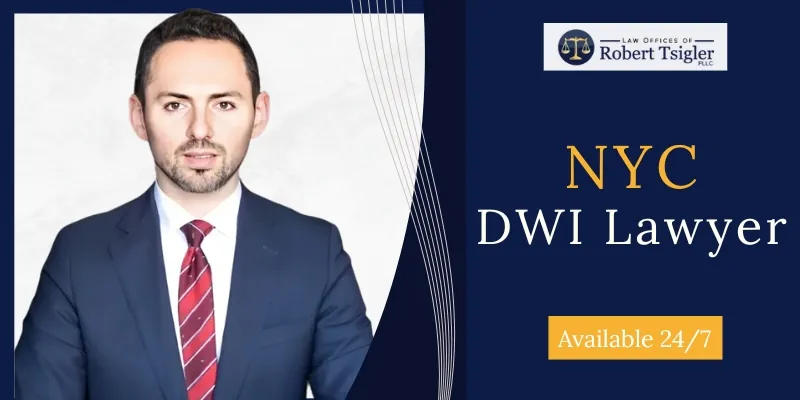
Top-Rated DWI Attorney in NYC
Getting arrested for DWI in New York is scary, and it can feel like your whole future is on the line. New York treats drunk and impaired driving charges seriously, whether you’re facing a DWI, a DUI, a DWAI, or a Drug-DWAI. The charge you face depends on your blood alcohol level and the specific facts of your stop.
No matter which one applies to you, the fines, license consequences, and even jail time are real. That’s why you shouldn’t wait to call a NYC DWI lawyer who can start building your defense right away.
The Law Offices of Robert Tsigler, PLLC has defended DWI cases across Manhattan, Brooklyn, and Queens. Call 718-878-3781 any time, day or night, for a criminal defense consultation in NYC.
Schedule a Consultation Today
"*" indicates required fields
New York Office
299 Broadway, Suite 1400,
New York, New York 10007
What a DWI Attorney Does For You
A DWI defense attorney provides guidance throughout both criminal court proceedings and civil administrative hearings.
A DWI case runs on two tracks at once: the criminal case in court, and a civil DMV hearing that decides whether your license is suspended. A DWI attorney handles both, gathering evidence for the DMV hearing, challenging the stop and the testing procedures, and negotiating with prosecutors to reduce or dismiss the charges. The sooner you bring one in, the more options you have.
Choosing Us as Your New York City DWI Attorney
Every DWI case is different, and it deserves a defense built around the specific facts, not a one-size-fits-all approach. We take the time to understand what happened in your arrest and how it affects your future, then use our team’s experience to pursue the best outcome available to you, whether that’s an acquittal, reduced charges, or a full dismissal.
Some of the benefits when you work with our firm include:
- 24/7 availability to quickly address your needs, including late-night court appearances
- Legal services with multilingual access
- Experience in state and federal courts, including the Manhattan Criminal Court for New York County
- Quick returns on calls and emails
- Experience from thousands of cases
- A record of successful cases
An arrest is not a conviction. Breathalyzer results and field sobriety tests are often treated as solid proof of guilt, but both can be wrong. Breath tests can be thrown off by faulty equipment, improper calibration, or how the test was administered. Field sobriety tests rely on an officer’s subjective judgment, and conditions like fatigue, nerves, or a medical condition can look like intoxication even when someone is sober.
Our New York DUI/DWI attorney knows how to examine this evidence and challenge it when it doesn’t hold up.
Law Offices of Robert Tsigler, PLLC - NYC DWI Case Restults 2026
NYC DWI Defense Case Results
Felony DWI Reduction & Career Preservation
Court: Queens County Criminal Court
The Situation: Facing an E-Felony DWI charge due to prior history, the client was at risk of a permanent felony record and mandatory incarceration. As a federal employee with Customs and Border Protection, a conviction would have resulted in immediate termination and loss of pension eligibility. The case was further complicated by chemical test refusal issues.
The Defense: Our firm conducted an exhaustive forensic review of body-worn camera footage, identifying critical Miranda violations and a lack of direct evidence regarding the operation of the vehicle. We aggressively challenged the prosecution’s evidence while simultaneously securing a hardship license, which allowed the client to maintain his employment throughout the 9-month legal process.
Timeline: Resolved in approximately 9 months
The Victory: The felony was vacated and reduced to a misdemeanor. The client avoided all jail time, saved his federal career and pension, and satisfied all court requirements without a felony conviction.
If you have been charged with DWI/DUI, contact an aggressive New York criminal defense attorney at 718-878-3781. Begin your case with a consultation!
The Evidence Used Against You After a DWI Arrest
Understanding how the state measures impairment and the role of various testing procedures is crucial to building a strong defense.
How New York Measures Impairment
Blood alcohol content, or BAC, measures how much alcohol is in your bloodstream, and it’s the main number police and prosecutors use to charge a DWI or DWAI. New York’s legal limit is 0.08%. Below that, you can still be charged with a DWAI if your BAC is between 0.05% and 0.07%, or if there’s other evidence that you were impaired.
How your body reacts to alcohol depends on more than how much you drank. Your weight, gender, how much food you had, and how long you were drinking all affect your BAC and how impaired you appear.
Impairment can start well before the legal limit:
- At 0.02%, reaction time and visual function already start to slip.
- At 0.05%, you can be charged with a DWAI. Alertness drops and steering becomes less precise.
- At 0.08%, you meet the legal threshold for DWI. Coordination, judgment, and reaction time are all significantly affected.
Even if your BAC comes in under 0.08%, an officer can still charge you with a DWAI based on their observations alone.
Field Sobriety Tests, Chemical Tests, and Refusals
Police use three types of tests during a DWI stop: field sobriety tests (like walking a straight line), a portable breath screening test, and a formal chemical test (breath, blood, or urine) back at the station. The chemical test has to happen within two hours of your arrest.
None of these tests are as reliable as they are treated at the moment. Field sobriety tests depend on an officer’s subjective judgment, and things like fatigue, nerves, or a medical condition can look like intoxication even when you’re sober. Breath test results can be affected by improper calibration, how the test was administered, or even your body temperature. Courts can throw out breath test results when the equipment wasn’t properly maintained or the officer didn’t follow required procedures.
Generally, you have the right to refuse a chemical test, but refusal comes with its own separate penalty. Under New York’s Implied Consent Law, driving on a New York road means you’ve already agreed to take a chemical test if an officer has reasonable grounds to believe you’re impaired. Note: If someone else was seriously hurt or killed in the crash, a judge can order a blood test even if you refuse.
If you refuse, the DMV holds a Refusal Hearing separate from your criminal case, and a first refusal carries a $500 civil penalty and a license revocation of at least one year, even if your DWI charge is later dismissed. A second refusal within five years raises that to $750 and 18 months.
Refusing also doesn’t stop prosecutors from pointing to the refusal itself as evidence of guilt at trial.
Penalties for a DWI, DWAI, or Aggravated DWI Conviction
The consequences of a DWI conviction in New York City are severe and can have long-lasting effects on your life. Below is a breakdown of the potential penalties you may face.
Fines and Jail Time by Offense
Penalties in New York scale with your BAC, whether anyone was hurt, and your prior record.
Standard DWI and DWAI penalties:
DWAI (first offense): $300 to $500 in fines, up to 15 days in jail, 90-day license suspension.
DWI (first offense): $500 to $1,000 in fines, up to one year in jail, license revoked for at least six months.
DWI (second offense within 10 years): $1,000 to $5,000 in fines, up to four years in prison.
DWI (third offense within 10 years): $2,000 to $10,000 in fines, up to seven years in prison, and permanent license revocation.
Aggravated DWI applies in two situations: when your BAC is 0.18% or higher, or when a child age 15 or younger is in the car:
First offense (BAC 0.18% or higher): $1,000 to $2,500 in fines, up to one year in jail, license revoked at least one year. If instead the aggravating factor is a child age 15 or younger in the car, the first offense is automatically a felony — not a misdemeanor — with fines from $1,000 to $5,000 and up to four years in prison.
Second offense within 10 years: $1,000 to $5,000 in fines, up to four years in prison, license revoked at least 18 months.
Third offense within 10 years: $2,000 to $10,000 in fines, up to seven years in prison, license revoked at least 18 months.
As of February 16, 2026, New York also started adding DMV points to alcohol and drug-related convictions for the first time. A DWI, DWAI, Aggravated DWI, or chemical test refusal now adds 11 points, the maximum the DMV assigns, on top of the fines and jail time above. That can trigger a separate license-suspension hearing even if your criminal case ends in a reduced plea.
License Revocation and Ignition Interlock Devices
A DWI conviction almost always affects your license, whether through suspension, revocation, or a court-ordered ignition interlock device (IID). An IID requires you to give a clean breath sample before your car will start.
You pay for the IID’s installation and monitoring yourself. For the minimum required term, costs generally run several hundred dollars and up, depending on your vehicle, your provider, and how long the device stays installed. If installing one would create a real financial hardship for your family, your attorney may be able to argue for a different set of restrictions instead.
Depending on your case, you may also qualify for a conditional or provisional license that lets you drive to work, school, or medical appointments during a revocation period.
Probation and Sentencing Conditions
If you’re granted probation instead of jail, the court can attach conditions such as:
- Alcohol or drug classes and evaluations
- Individual or group counseling
- Random drug and alcohol testing
- An ignition interlock device or a SCRAM alcohol-monitoring bracelet
- Restrictions on who you can contact or where you can go
- Monthly fines, restitution, or check-ins with your probation officer
- Firearm restrictions
Missing a class, failing a test, or breaking any condition can lead to a violation, stricter restrictions, or jail time. How long probation lasts usually depends on the severity of the offense and your prior record.
What Is New York’s Zero Tolerance DUI Law?
New York’s Zero Tolerance Law applies to drivers under 21. Under this law, any measurable amount of alcohol, as little as a BAC of 0.02%, can lead to a Zero Tolerance violation. This is not a criminal DWI charge. It’s a separate, non-criminal rule handled by the DMV, with its own fines and license penalties.
The consequences don’t disappear at 21. A Zero Tolerance finding stays on your driving record and can be considered by the DMV for years afterward, including in the 25-year lookback the DMV uses when someone applies to get a suspended or revoked license back later in life.
This record can make it harder to get a job or keep a clean record heading into adulthood. Underage drivers found in violation of Zero Tolerance also lose the trust of parents and peers who might otherwise ride with them, on top of the same fines and license consequences adults face.
When Does a DWI Become a Felony in NYC?
While many DWI cases are handled as misdemeanors, certain circumstances can elevate charges to a felony level. It is important to understand what triggers these more serious charges.
What Makes a DWI a Felony
A DWI becomes a felony in New York under any of these circumstances:
A prior conviction. A second DWI, DWAI-Drug, or DWAI-Combination conviction within 10 years is a Class E felony. A third within 10 years is a Class D felony.
A child in the vehicle (Leandra’s Law). Driving while intoxicated or drug-impaired with a passenger age 15 or younger is an automatic Class E felony, even on a first offense with no prior record. If the child is seriously injured, the charge rises to a Class C felony; if the child dies, it’s a Class B felony (Source: NY DCJS).
A death or serious injury. Causing a fatal accident while intoxicated can lead to a vehicular manslaughter charge, and causing serious physical injury can lead to vehicular assault, both felonies regardless of prior record.
A repeat Aggravated DWI. A second Aggravated DWI (BAC of 0.18% or higher) within 10 years is also a Class E felony, and a third is a Class D felony.
Any one of these can turn what might otherwise be a misdemeanor into a felony charge with years, not months, of potential prison time.
Vehicular Manslaughter Charges
When a DWI results in a fatal accident, the charge can escalate to vehicular manslaughter, a serious felony with the potential for a lengthy prison sentence. No matter how frightening that situation feels, legal options are still available, and consulting a NYC DWI attorney immediately can make a significant difference in the outcome.
Collateral Consequences of a Felony Conviction
A felony DWI conviction carries consequences beyond prison and fines. It can block you from certain college programs and financial aid, cost you a professional license, and make it harder to pass a background check for future jobs. It can affect your right to vote, hold certain government jobs, or own a firearm.
Repeat offenders face an even steeper penalty on the license side: under a recent DMV rule change, four alcohol or drug-related driving incidents in a lifetime, down from the previous five, now trigger mandatory denial.
Current as of July 2026.
FAQs About NYC DWI/DUI Laws
How Much Does a DWI Lawyer Cost in New York?
The cost of a DWI lawyer in New York depends on specifics like the attorney’s experience, how serious and complex your case is, and where the attorney is located. A DWI lawyer might charge an hourly fee or a flat fee, depending on the case. Lawyers in cities like NYC also tend to have higher rates than rural attorneys.
How Do I Get My DWI Dismissed in New York?
There are different defenses or plea deals that can get your DWI dismissed in New York, although the right method varies by case. You may be able to argue that you were not in actual control of the vehicle when you were stopped, or raise a rights-violation defense, such as an officer stopping you without probable cause.
Can a Lawyer Get a DWI Charge Dropped?
A lawyer cannot guarantee that DWI charges will be dropped, but you are more likely to secure a favorable outcome when you hire one. An attorney can assess whether the prosecution’s evidence was gathered lawfully. If it wasn’t, the evidence could be suppressed, making it harder for the prosecution to meet its burden of proof.
Do You Need a Lawyer for a DWI in New York?
You aren’t required to hire a lawyer, but it is in your best interest to have one. An attorney understands New York DWI laws and can negotiate a plea deal, file motions to suppress evidence, or build another type of defense on your behalf.
What Happens If I Refuse a Breathalyzer in New York?
Refusing a chemical test triggers an automatic DMV license revocation of at least one year, separate from any criminal charge. Prosecutors can also use the refusal as evidence of guilt at your DWI trial.
How Long Does a DWI Stay on My Record in New York?
A DWI conviction stays on your standard New York driving record for 15 years. A separate DMV record, called a lifetime abstract, shows it forever, and it stays on your criminal record permanently unless you get it sealed. It can also count as a prior offense for up to 10 years if you are arrested again.
Can I Get a Conditional or Restricted License After a DWI Arrest?
You may qualify for a conditional license that lets you drive to work, school, or medical appointments during a revocation period. Eligibility depends on your record and whether the court or DMV approves your application.
What’s the Difference Between a DWI and a DWAI in New York?
A DWI requires a BAC of .08% or higher and is a criminal offense. A DWAI applies at a BAC between .05% and .07% and is typically a non-criminal traffic infraction, though it still carries fines and license consequences.
Can I Be Arrested for a DWI in a Parked Car?
Yes. You don’t have to be driving to be arrested for a DWI. If you’re found intoxicated behind the wheel of a parked car, even with the engine off, police can still arrest you, since New York law treats the ability to drive away as a safety risk on its own.
An Arrest Is Not a Conviction. Contact the Law Offices of Robert Tsigler About Your NYC DWI Case
An arrest is just the start of the process, not the end of it. A jury still has to find you guilty beyond a reasonable doubt, and many cases never make it that far. Whether the officer had probable cause, whether any searches were legal, and whether the sobriety and chemical tests were properly administered can all give your attorney grounds to get the case reduced or dismissed before trial.
New York prosecutes DWI cases aggressively: alcohol plays a role in more than 30% of fatal crashes statewide, and DWI-related felony arrests reached 3,775 in 2024. But aggressive prosecution doesn’t mean an automatic conviction, and skilled legal representation can still change the outcome.
That’s where an experienced NYC DWI lawyer makes the difference: someone who looks at the specific facts of your stop, your arrest, and your test results, and builds a defense strategy around them rather than treating your case like every other one on the docket.
Contact the Law Offices of Robert Tsigler, PLLC today. We know an accusation isn’t the same as a conviction, and we’ll work to protect your rights and pursue the outcome you deserve.
Representing Clients Across NYC
- Brooklyn DWI Defense
- Queens DWI Defense
- Staten Island DWI Defense
- Manhattan DWI Defense
- Bronx DWI Defense

New York City
Practice Areas
Real Results

295 Google Reviews | 4.9/5 Ratings
4.9/5 Ratings

Rob is a great criminal defense attorney whom I would recommend for his expertise and communication-style.
—Brad
Robert knew exactly what he was doing and he got the CHARGES DISMISSED!!! Couldn't ask for a better attorney. I definitely recommend him.
—Mike
The best criminal defense lawyer. Takes his client’s calls at any time of the day or night. He was always there for me and my family. Saved my life.
—Jacquille
I retained Robert Tsigler to help me with a criminal case. He exceeded all my expectations and was able to get a great resolution for me... He was highly respected by the district attorney.
—David
I hired Robert to defend me in a case where the cops arrested me for something I didn't do. I was really worried and angry that I was arrested for something that wasn't my fault. Robert told me to relax and that he would handle everything. He kept his word and got all the charges dropped!
—Joe
We Set the Bar Others Strive to Reach












Our NYC DUI Attorneys at Robert Tsigler, PLLC are Ready to Fight for You!
DON'T
DELAY
discuss your case right away.
Schedule A Consult
"*" indicates required fields