


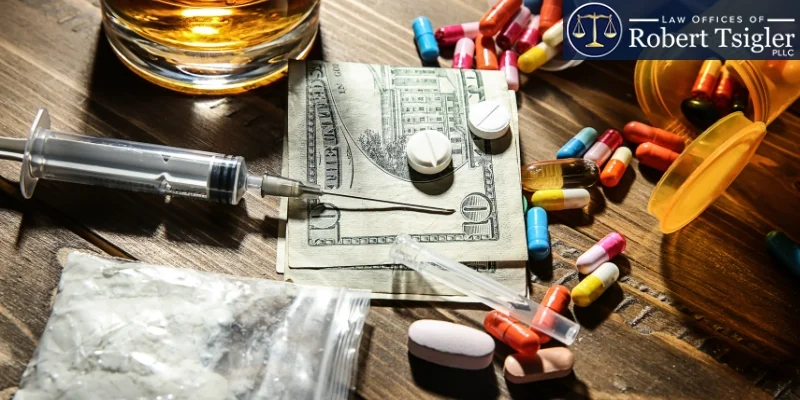
New York drug crime classifications range from minor violations to Class A felonies, with trafficking offenses carrying potential life sentences. The consequences you face depend on the type of drug, the amount of the drug, what you were doing with the drug, where you had the drug, your criminal history, and other factors.
You have too much at stake to try to defend yourself against the criminal charges you face in New York City.
Attorneys with the Law Offices of Robert Tsigler, PLLC, understand New York’s drug laws and how to defend clients who face drug charges.
Drug Crime Classification
In New York, crimes are classified as a violation, misdemeanor, or felony. Misdemeanors are divided into Class A and B, while felonies range from A to E. Crimes are further subdivided into violent and nonviolent offenses.
In general, minor possession of less dangerous drugs can lead to a misdemeanor charge or citation. Possession of large amounts of an illegal drug can result in felony charges. Drug trafficking is considered one of the most serious offenses and can result in a life sentence.
Methamphetamine
New York’s drug laws take into consideration the drug’s potential danger. Methamphetamine, for example, is a very dangerous stimulant. Also known as meth or speed, the drug is classified as a Schedule II(d) controlled substance. New York’s drug laws not only criminalize possession of meth but also the materials for making meth.
Possession of less than .5 ounces of meth can result in a Class A misdemeanor, which carries a potential jail sentence of up to one year. Possession of more than .5 ounces but less than two ounces can result in a Class C felony punishable by up to 5.5 years in prison..
Cannabis
As with many states, New York’s cannabis laws are moving toward decriminalization, although there are still restrictions governing marijuana use. Adults 21 and older can now possess up to three ounces of cannabis for personal use in New York. There are still prohibitions on using marijuana inside a motor vehicle or in areas where smoking is prohibited.
Possessing more than three ounces but less than 16 ounces is a civil violation punishable by a fine of up to $125. Possessing more than sixteen ounces can be charged as a Class A misdemeanor, and quantities in the pounds can rise to a felony (Source: N.Y. Penal Law § 222.25, 2021).
If you were arrested or issued a citation for possession of an illegal drug, you need a New York drug crime lawyer to ensure that your rights are protected.
Possible Defenses for Drug Crimes
As your New York drug lawyer prepares your defense, they can look for factors that can lead to reduced charges, a favorable plea bargain offer, or even potentially dropped charges. Some defenses your lawyer may consider include:
Lack of Knowledge
Although it is not a guarantee of lower penalties, a lack of knowledge can be a mitigating factor in your case. For example, someone may have given you medication for pain management without disclosing that the drugs require a prescription. In other cases, a person may have left the drugs in your possession without your knowledge. These situations can make it difficult or impossible for the prosecution to prove criminal intent.
Mistaken Identity
In drug cases, law enforcement often relies on confidential informants, rapid field operations, or surveillance video that can be grainy or unclear. These circumstances make it easy for officers to misidentify an innocent bystander or an uninvolved third party as the person engaged in illegal drug activity. A defense attorney can challenge this evidence by presenting alibis, analyzing surveillance footage, or questioning eyewitness reliability to demonstrate that the wrong individual was charged.
Lawful Possession
In other cases, you may be able to argue that you lawfully possessed the drug. Maybe you did not have a valid prescription on hand at the time of your arrest but can prove that you met with a doctor at a later time. Certain drugs can be prescribed for medicinal use, even if they are not legal for recreational use.
Small Amounts
The quantity of the drug in your possession matters significantly when criminal charges or an indictment is brought. Police can make mistakes when measuring drugs, and later tests may prove that the quantity of an illegal drug is lower than previously thought. The charge will be reduced in these situations.
Age
The age of the defendant is another factor, especially when the person possessing the drug is under 16 years old. First-time juvenile offenders may face more lenient charges because minors are seen as more redeemable than adults in the eyes of the law.
New York’s 911 Good Samaritan Law
If you or someone with you is experiencing a drug overdose, New York’s 911 Good Samaritan Law protects the caller and the person overdosing from being charged with most drug possession offenses. The protection applies as long as you call 911 in good faith and the evidence of drug possession was found because you sought medical help. It does not cover drug sales or trafficking-level offenses (Source: N.Y. Penal Law § 220.78). The New York State Department of Health confirms this protection applies regardless of the caller’s age.
Judicial Diversion Program: Treatment as an Alternative to Prison
Some people charged with a Class B, C, D, or E drug felony in New York qualify for the Judicial Diversion Program. Instead ofprison, an eligible defendant can enter a court-supervised drug or alcohol treatment program. Successful completion can lead to a reduced charge or, in some cases, dismissal. Eligibility depends on the specific charge, your criminal history, and whether you have a prior violent felony conviction within the past 10 years (Source: N.Y. Criminal Procedure Law § 216.00). New York operates drug treatment courts throughout the state, including in the counties surrounding New York City and Long Island, so a qualified drug crime lawyer can raise diversion as an option early in your case, when appropriate.
Schedule Your Drug Possession Consultation Today
Every drug defendant is presumed to be innocent, and anyone charged with a drug offense has constitutional rights. If you were recently charged with drug possession, the Law Offices of Robert Tsigler, PLLC, can fight for your rights. Don’t wait to begin preparing for your defense.
Contact our office today to schedule your consultation. Call 718-878-3781 or visit our contact page.
FAQs
Will I Wait for My Trial in Jail?
Non-violent offenders who do not pose a threat to the public are generally granted bail. Repeat offenders or individuals alleged to have trafficked drugs may face high bail amounts or be denied bail. If you are granted bail, you will have to follow your bond conditions to ensure that you can remain out of jail.
Can My Felony Drug Possession Charge Be Reduced to a Misdemeanor?
Yes, this is one possible outcome of the plea-bargaining process. If you have no prior convictions or past drug-related charges and are otherwise an upstanding resident of New York, your drug possession lawyer can use the facts of your case to try to lower the charge. Avoiding a felony conviction on your record could greatly help your personal and professional life.
Can Drug Charges Be Dropped?
Yes. In some cases, when exculpatory evidence is discovered, prosecutors may seek to have the charges dropped. Prosecutors are sworn to seek justice, and the discovery of new evidence can change the circumstances of your case. Prosecutors will rarely move to have a case dismissed on their own, though, which is why the services of a New York drug possession lawyer are so critical.
What Is the Legal Standard for Proving Guilt for Drug Possession?
Prosecutors have a very high bar to meet when proving guilt. In fact, criminal courts have the highest standard to meet. While police only need to show probable cause and civil courts require a preponderance of evidence, prosecutors must prove guilt beyond a reasonable doubt. If a jury has a reasonable doubt about an individual’s guilt, they are obligated under that standard to find the defendant not guilty.
Schedule Your Drug Possession Consultation Today
Every drug defendant is presumed to be innocent, and anyone charged with a drug offense has constitutional rights. If you were recently charged with drug possession, the Law Offices of Robert Tsigler, PLLC, can fight for your rights. Don’t wait to begin preparing for your defense. Contact our office today to schedule your consultation.