


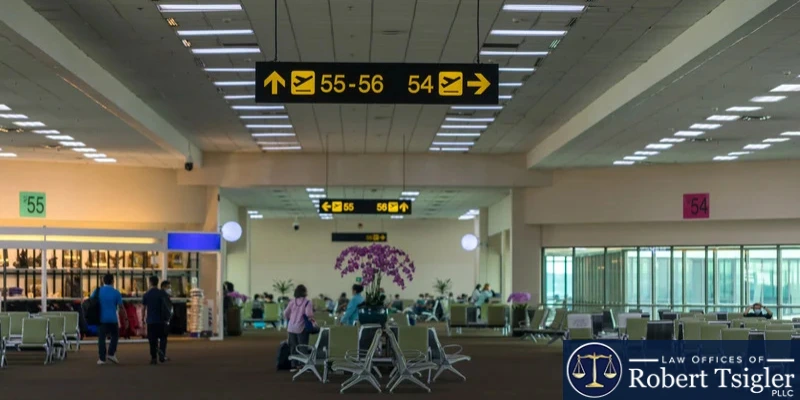
Traveling can be stressful enough without the added anxiety of losing money to airport authorities. If you have to travel with a large amount of money, you may find yourself asking, “What should I do if my cash is seized at the airport?” This situation can be confusing and overwhelming, but understanding the steps to take can help you navigate this challenging experience and hopefully prevent it from happening altogether.
Stay Calm and Compliant:
First, relax. It’s natural to feel a sudden rush of panic or frustration, but it will only hurt you to let those emotions take control. Second, cooperate with the authorities. This doesn’t mean that you have to provide an incriminating statement, but giving the police any reason to distrust you by arguing or resisting won’t help your case.
In general, after authorities seize cash, you’ll be given some receipt, notice of seizure, or other paperwork documenting the event and the contact information relevant to tracking the proceeding. Keep this document safe.
Understand the Reason for the Seizure:
Taking the time to fully understand why your cash was seized is crucial. There are several reasons why airport authorities might confiscate your money. Common reasons include carrying large sums of cash, having travel patterns that raise red flags, or displaying suspicious behavior.
Huge Sums of Money
Carrying large sums of cash is not prohibited while going abroad, but amounts above $10,000 must be declared. Your money may be seized if you do not do this.
Routes of Travel
Regular travel to and from nations with high rates of money laundering or drug trafficking may potentially draw attention and result in cash seizures.
Unusual Conduct
Authorities may target you and possibly seize your money if you seem uneasy, give contradictory answers about where or why you have the money, or behave suspiciously in other ways.
Legal Guidelines for Traveling With Sums of Cash
If you are ever planning to travel internationally with more than $10,000 in cash, make sure that you’re taking the correct precautions. First, when you arrive at Customs, you’ll need to fill out a FinCEN 105 form. Also, always be prepared to deal with questioning by law enforcement agents—you’ll need to be able to explain to them why you’re carrying such a large amount of cash. If Transportation Security Administration (TSA) officers request that you undergo extra screening, allow this to occur. Additionally, never allow your carry-on luggage to end up out of sight.
However, if you are unable to explain to the TSA agent why you’re carrying a large sum of cash, they’ll file a report to the appropriate law enforcement agency, such as the DEA. Unfortunately, this often leads to a long and drawn-out process, which could even result in you missing your flight.
If it’s ever necessary for you to travel with a large amount of cash on hand or in your luggage, always make sure you have an explanation for officers. Of course, this will need to be a legitimate explanation to satisfy security officials at the airport. It is also advisable to speak with a legal advisor about the safest ways to transport large quantities of cash before you go. Additionally, think about using wire transfers, travelers’ checks, or safe digital payment options as alternatives to carrying cash.
Even if the money you’re carrying was obtained through lawful means, this doesn’t mean you won’t run into issues. First, this could still result in accusations from law enforcement officials, which can then lead to your money being confiscated from you—even if you’ve taken all the necessary precautions when traveling across borders with sums of cash. What do you do, then?
Immediate Steps to Take:
After your cash has been seized, there are immediate steps you should take to improve your chances of recovering your money. Failure to follow these steps might mean your cash is lost forever.
- Contact a Lawyer: One of the first things you should do is call an airport cash seizure lawyer with experience in these matters to help you navigate the legal process, collect the proper paperwork, and represent your interests.
- Gather Documentation: You should begin collecting any evidence that might show the legitimate source of your money, such as bank statements, business records, receipts, or affidavits from individuals who can testify to the lawful source of your money.
- Make a Claim: You can submit a claim to the relevant authorities with the help of your lawyer. In order to fight the seizure, you must provide comprehensive information regarding the source and intended use of the funds.
Additionally, after the cash seizure attorney has been hired, they will quickly take some crucial actions. For instance, your lawyer will seek to ensure that any airport security footage of the incident can be used as evidence to support your claim. Once court proceedings have commenced, this can be valuable evidence—however, a demand must first be filed if you’d like this video footage to be reserved. Your attorney will obtain a court order, which allows them to receive a copy of this video.
The Legal Process:
The legal process after a cash seizure is most helpful if you understand how it works. The general process flows as follows:
Notification and Seizure
If your cash has been seized, you should be given a receipt or notice that tells you what has happened. It’s important to keep the record for yourself so you know what’s going on and what to do next.
Administrative Forfeiture
If the amount seized is less than $500,000, the case gets treated first as an administrative forfeiture. The government sends notice to the owner of the property, who then has a limited time to contest the seizure.
Judicial Forfeiture
If the amount is more than $500,000 or if the property owner contests the seizure, the case will be transferred to judicial forfeiture, which involves an adversarial court hearing in which the government must show that the cash is criminally connected.
Defending Against Cash Seizure:
A cash seizure must be vigorously contested, and to do so, you need to have a good understanding of forfeiture laws. This is how you should defend yourself if this happens to you.
Proving Legitimate Source – The most important defense is to show that the money is from a legitimate source by showing what it is being used for and where it came from. This may involve showing bank statements, business records, and even affidavits from people who know about the cash and that it is from a lawful source.
To successfully argue against the seizure, you must verify that your cash was lawfully obtained by offering a mix of proof from numerous sources. Your lawyer may file a petition for remission or mitigation with the seizing agency, which is a request that the agency return your money because it was improperly seized.
If it was seized properly, and the circumstances warrant some reason for the forfeiture, then your lawyer can prepare a persuasive petition, presenting all of the necessary evidence and legal arguments needed to prove the cash’s legitimacy.
- Detailed Financial Records: Provide receipts and bank statements, tax returns, and other documents indicating that the money under dispute has a lawful origin and that the receipts and bank statements have been recorded consistently with the income in question.
- Business Documentation: If this cash is for business purposes, include such documents as supply invoices, contracts, or business registries that verify your claims. Also, letters from business partners or clients verifying transactions can be helpful.
- Personal Affidavits: Obtain affidavits by anyone who can tell the story of how you got the money. These affidavits should be as detailed and thorough as possible and corroborate your account. For example, if the money came through from a friend or family member, an affidavit by the lender explaining the transaction should be presented.
Challenging Procedural Violations – Procedural violations by law enforcement can also be a successful defense. If authorities don’t comply with the rules for seizing your money, for example, by not giving timely notice or mishandling evidence, they can be forced to return your funds.
When Will Seized Money Be Returned?
A few common circumstances can lead to your money being returned if it was seized at an airport. These situations are:
- The search that uncovered the cash was deemed unconstitutional.
- No laws were contravened, and thus, no criminal charges were pressed.
- You didn’t receive notice of the seizure on time.
- The forfeiture was grossly disproportionate to the offense, which the Excessive Fines Clause of the 8th Amendment prohibits.
- An oral amendment was made of the currency declaration, but this wasn’t honored by Customs.
FAQs
Can I Travel with Large Amounts of Cash?
Yes, you can travel with a large amount of cash – but if you are traveling internationally, you must declare any amounts over $10,000. If you don’t, your money can be seized. Keep receipts documenting that the cash came from a legitimate source, and be ready to explain its purpose should law enforcement officials ask.
Can You Keep Cash in Your Pocket Going Through Airport Security?
Yes, you can keep cash in your pocket when going through airport security, but it is advisable to place it in a carry-on bag to avoid raising suspicion or having it fall out during the screening process. If questioned by TSA, be prepared to explain the source and intended use of the cash.
What Are My Chances of Getting My Money Back?
Whether you are going to get your money back depends on the circumstances of the seizure and the strength of your evidence supporting the legitimacy of the funds. Having an experienced lawyer to help you through the process and prove your case can greatly increase the odds of recovering your seized funds.
What Should I Do Immediately After a Cash Seizure?
After an airport cash seizure, remain calm and cooperate with law enforcement authorities. Make sure you receive a receipt or notice of seizure and keep it. Contact an experienced airport cash seizure attorney as soon as possible and follow their instructions to prepare the necessary documentation to show the legitimate source of your funds.
What Documentation Do I Need to Prove My Cash Is Legitimate?
Obtain bank statements, invoices, receipts, and business records that show where the money came from to prove the legitimacy of your cash. Affidavits from people who can attest to the source of the money can also be beneficial. Including thorough paperwork bolsters your argument and proves your money is from a legal source.
How Long Does the Process of Recovering Seized Cash Take?
Cash that has been seized can be recovered in a variety of ways. Therefore, the timelines differ. While judicial forfeiture proceedings, which include larger amounts or disagreements, can take a much longer period of time, administrative forfeiture cases typically are quicker. The length of time depends on the court’s schedule, the intricacy of the case, and how effectively your attorney represents you.
What Should I Do If My Initial Claim Is Denied?
If that initial claim is rejected, know that it is not the end of your options. You may appeal the decision with the help of an attorney who understands the reasons for the denial. Your airport cash seizure attorney can strengthen your case for the appeal by gathering additional evidence and addressing any weaknesses in your initial claim to improve your chances of success.
Contact an Airport Cash Seizure Lawyer
If your cash has been seized at the airport, chances are you are currently dealing with an extremely stressful and overwhelming experience. You can improve your chances of recovering your money by consulting with a skilled airport cash seizure lawyer from the Law Offices of Robert Tsigler, PLLC. Book a consultation with us today.